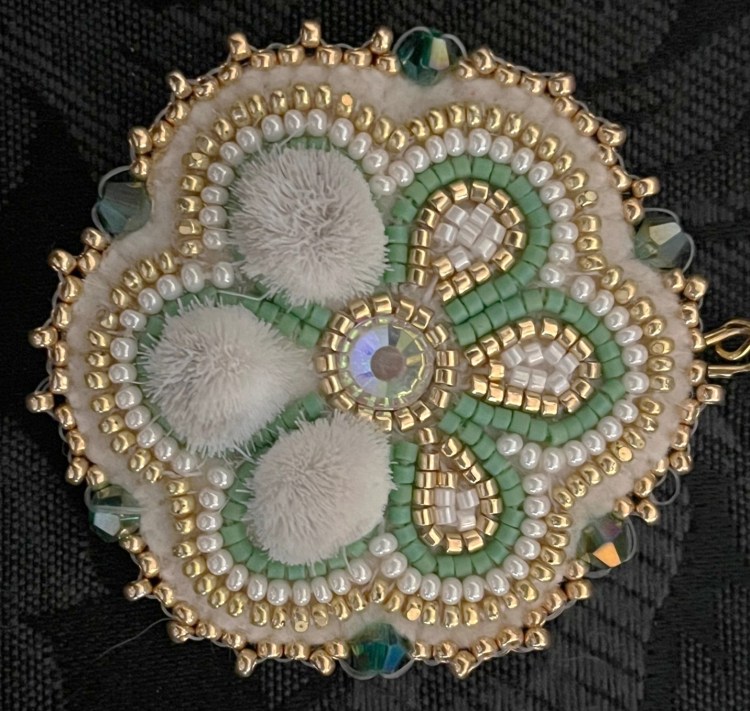
Pre-Contact Beading Traditions
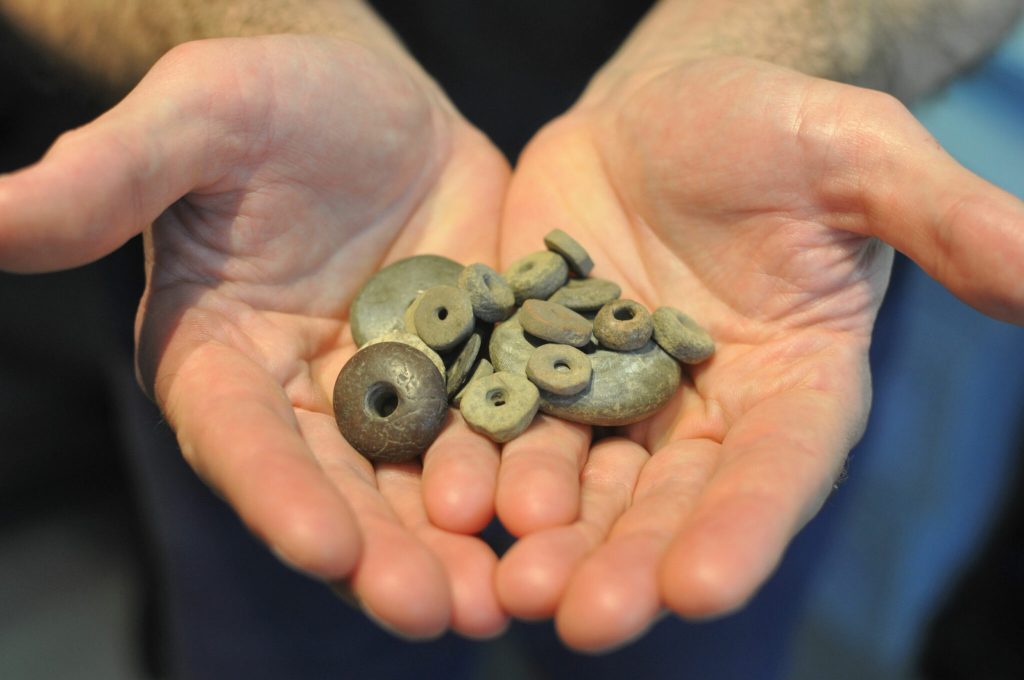
Before European contact, First Nation peoples in what is now British Columbia had rich and complex beading and adornment traditions. While the small, glass beads commonly associated with beading today came with Europeans, we created and used beads long before colonization.
Materials Used:
- Shells (especially dentalium shells from the Pacific coast)
- Berries such as Arbutus tree berries, Juniper berries
- Roots from Devils Club, Cedar tree roots
- Animal teeth, bones, and claws
- Stone, amber, and seeds
- Copper and other metals, shaped and polished
- Porcupine quills, dyed and woven into elaborate designs (especially in northern and interior regions)
Beads are sewn onto clothing, incorporated into jewelry, and used in ceremony trade and trade. Each bead could represent a story, status, clan, or spiritual significance.
The Arrival of Glass Beads (Post-Contact Era, 18th Century Onward)
European contact in the 18th century brought trade beads—small, brightly colored glass beads—into Indigenous communities through fur traders like the Hudson’s Bay Company. These beads quickly became highly valued for their color, uniformity, and ability to enhance traditional regalia and designs.
Impact of Glass Beads:
- Adaptation of traditional designs to incorporate new materials
- Expansion of color palettes and increased intricacy in patterns
- Symbol of wealth and prestige, used in regalia, belts, bags, and headdresses
- Trade and gift-giving: beads were exchanged across vast distances
Despite their European origin, glass beads were woven into Indigenous cultural frameworks, reinforcing—not erasing—traditional artistic practices.
Cultural Significance
Beading has always been more than art; it is a form of cultural expression, language, and spiritual connection. Beaded items are often used in:
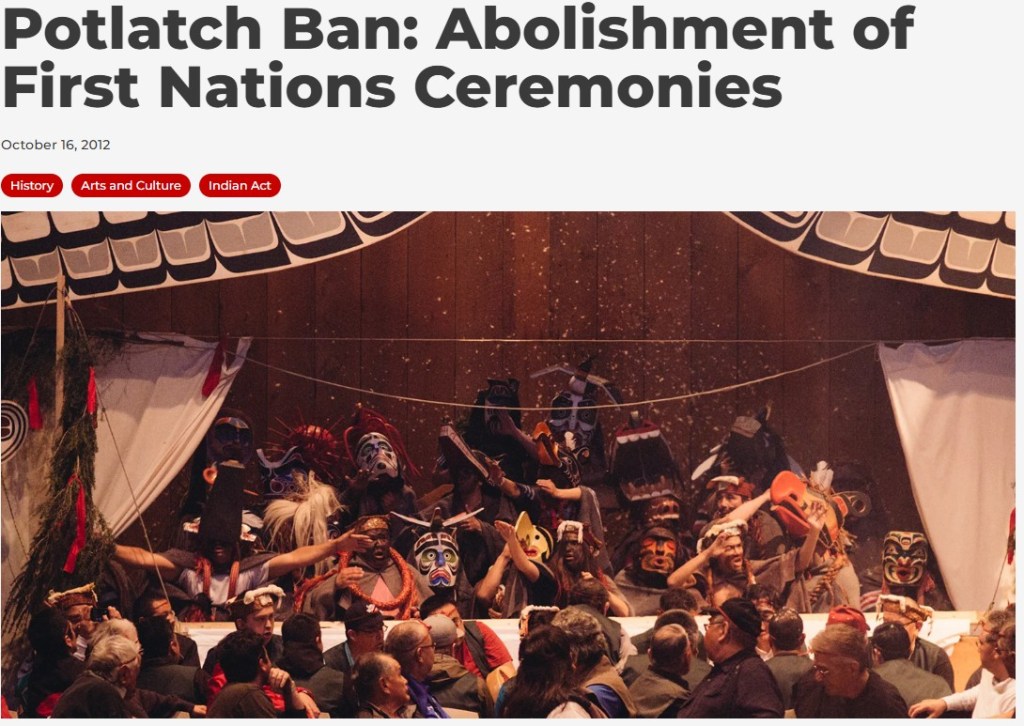
- Potlatches and other ceremonies
- Clan and family identification
- Honoring ancestors and telling stories
- Healing and spiritual protection
Every beadwork design can tell a story or convey status, personal achievements, or relationships with land and kin.
Suppression and Resilience (19th–20th Century)
The 19th and early 20th centuries saw increasing efforts by colonial governments and missionaries to suppress First Nation cultural practices. The strategically and meticulously planned effort of getting rid of the Indian problem included eradicating cultural practices. These efforts expanded to the practice of beading.
Beadwork in BC today is not a revival. It is continuation. Indigenous bead artists aren’t just preserving a tradition—they’re pushing it forward with every stitch, color, and story.
In a time of climate crisis, cultural resurgence, and social reckoning, beading is a form of Indigenous futurism, grounded in the past and aimed at the next seven generations.
Residential Schools and Cultural Erasure:
- Children were often forbidden from speaking their languages or practicing traditional arts
- Some beadwork traditions were lost or driven underground
However, beading persisted—often passed down in secret or adapted into new forms. Women in particular played a vital role in preserving beading knowledge through family networks and community strength.
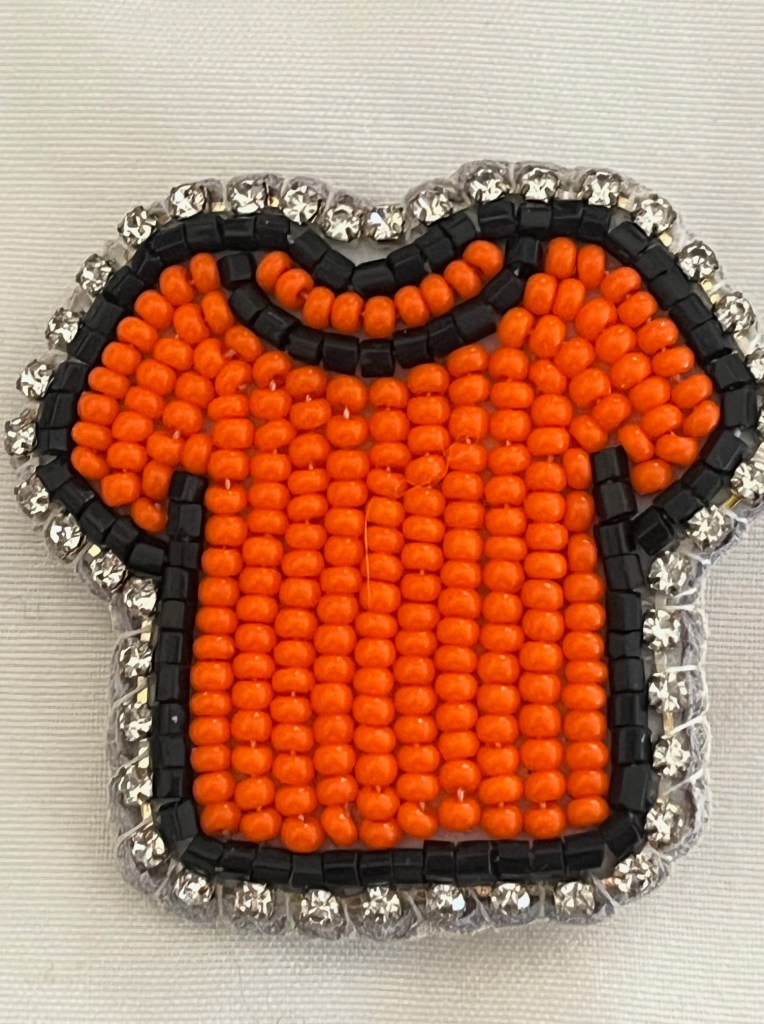
The Orange Shirt Society was formed in Williams Lake by the founders of Orange Shirt Day to encourage and support communities to recognize Orange Shirt Day and to support reconciliation events and activities. The goal is to create awareness of the individual, family and community inter-generational impacts of Indian Residential Schools through Orange Shirt Day activities, and to promote the concept of “Every Child Matters”.
Revival and Contemporary Beading (Late 20th Century–Present)
In recent decades, there has been a powerful resurgence of Indigenous art and culture, including beading. This revival is part of broader movements of cultural reclamation, sovereignty, and decolonization.
Modern Contexts:
- Beading as activism: used in campaigns like MMIWG (Missing and Murdered Indigenous Women and Girls)
- Artistic innovation: blending traditional and contemporary designs
- Teaching and workshops: revitalizing beading among youth and in urban settings
- Online platforms have created global audiences for Indigenous bead artists
In BC, artists from nations such as the Nuu-chah-nulth, Haida, Coast Salish, Tlingit, Gitxsan, and Secwépemc continue to adapt and evolve beading into contemporary forms while maintaining cultural continuity.
Regional Styles in BC
Different First Nations in BC have distinctive styles and traditions in beadwork:
- Coast Salish: Often focus on wool weaving but also include bead accents in regalia
- Interior Nations (e.g., Secwépemc, Nlaka’pamux): Known for moccasin tops and geometric designs
- Northern Nations (e.g., Gitxsan, Nisga’a): Integrate beadwork into button blankets and ceremonial dress
- Nuu-chah-nulth and Kwakwaka’wakw: Combine beads with cedar bark and other regalia materials
Each style is deeply tied to land, family, and community identity.
Conclusion
Beads and beading among First Nation Peoples in British Columbia are not just decorative—they are a living, dynamic part of First Nation culture. From time immemorial to the present, beading has served as a medium of identity, storytelling, and history. Today, beading remains a powerful symbol of culture and pride, woven through the generations.
Additional Resources
Giggy’s Beads Boutique is the heartfelt endeavor of jewelry designer Valerie Davidson, known traditionally as Misko Mangiikwe/Red Loon Woman.

A Thread Between Generations: Indigenous Beadwork From Then to Now.
Indigenous Corporate Training
Providing Indigenous relations training to large and small
organizations and individuals for over 20 years.
 Four Salish Winds Society